
Kendrick Lamar’s Super Bowl Halftime Show: A Performance Packed with Meaning

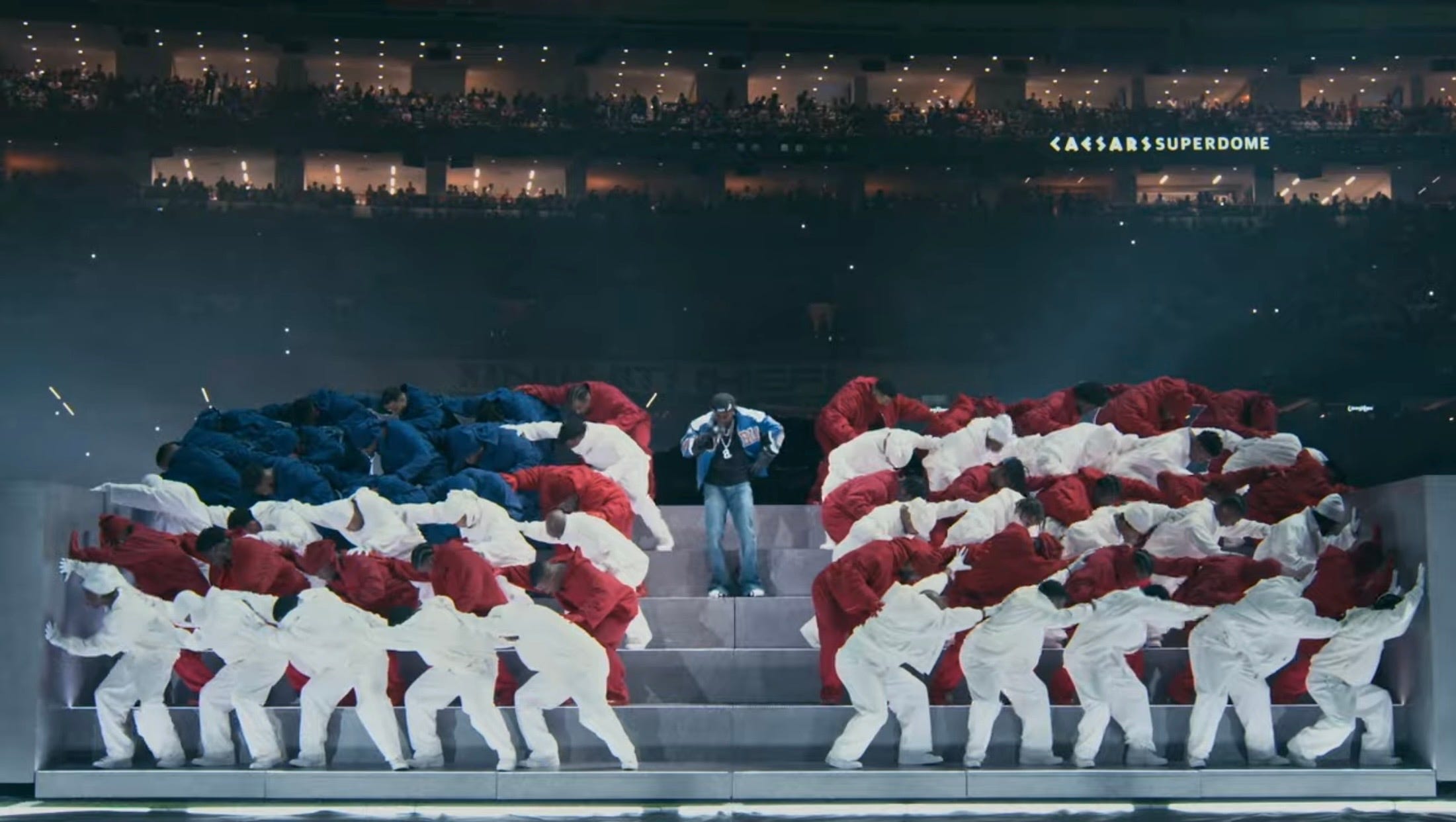
Photo credit: Screenshot, YouTube, NFL
It’s been just under a week since Kendrick Lamar’s Super Bowl halftime performance, and I’m still thinking about it. This wasn’t just a musical performance—it was a powerful statement. A masterclass in symbolism, history, and social commentary.
For those of us who care about equity, diversity, and the stories often left out of mainstream conversations, this was a moment to sit up and take notice. Lamar used his platform to shine a light on deep-rooted issues, weaving them into a performance that was as visually striking as it was thought-provoking.
A Performance with Purpose
From the start, it was clear this was more than just a show. Samuel L. Jackson, playing the role of Uncle Sam, immediately set the tone. Uncle Sam is the embodiment of the U.S. government, and placing him front and centre was a clear invitation to reflect on what America stands for—especially for Black communities.
Then there was the car. Lamar entered the stage on top of a black Buick GNX, a car with deep cultural significance, particularly in Black American history. It was a nod to the 1980s and a reference to the realities of life for Black communities in that era—issues of systemic racism, economic disparity, and cultural resilience.
And then came the dancers. Their red, white, and blue outfits weren’t just patriotic—they transformed into a divided American flag, a powerful symbol of the fractures in U.S. society. The message? America remains deeply divided, and unity is still a work in progress.
Unpacking the Deeper Symbolism
One of the most striking moments was Lamar’s reference to “40 Acres and a Mule.” This phrase dates back to the Civil War, when freed Black people were promised land as reparations—land that was never given. It’s a painful reminder of the broken promises and systemic inequalities that still shape society today.
Then, there was Serena Williams performing the Crip Walk. A dance that originated in L.A.’s gang culture, it’s become a controversial yet proud expression of Black culture. Seeing Serena—a global icon—doing it on one of the world’s biggest stages was a moment that spoke to cultural ownership, pride, and reclaiming narratives that mainstream media has often twisted.
And, of course, the lyrics.
Lamar’s words “The revolution’s about to be televised. You picked the right time but the wrong guy” were a direct play on Gil Scott-Heron’s “The Revolution Will Not Be Televised.” He wasn’t just referencing history—he was making a statement about today’s leaders and the movements shaping our world right now.
Why This Matters
Kendrick Lamar didn’t just perform—he made us think. In just a few minutes, he tackled race, power, identity, and history. He reminded us that music isn’t just entertainment; it’s a tool for storytelling, activism, and change.
For those of us who care about equity and inclusion, this was a moment to recognise the power of representation. When artists use their platform to bring these conversations into mainstream spaces like the Super Bowl, it pushes the dialogue forward. It challenges the narratives we’ve been fed and encourages us to dig deeper.
So, what did you take away from the performance? Let’s talk about it.